Undergraduate researchers bring Bloomsburg science to the world stage in San Diego
Bloomsburg
Posted
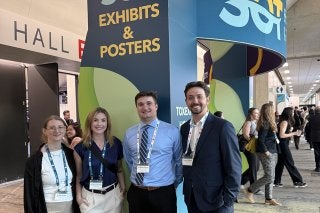
Bringing together more than 6,000 researchers, medical scientists, and students from across the globe, the annual Society of Toxicology’s meeting and ToxExpo is one of the world’s largest gatherings of scientific minds.
Joining them this spring in San Diego were four Commonwealth University-Bloomsburg chemistry pre-med majors — Andrew Faust, Kylie Liebersohn, Noelle McKee, and Duane Milnes.
For the Bloomsburg seniors, it was a chance to present original research alongside institutions like UCLA, the University of Pennsylvania, and international programs shaping the future of toxicology and biomedical science.
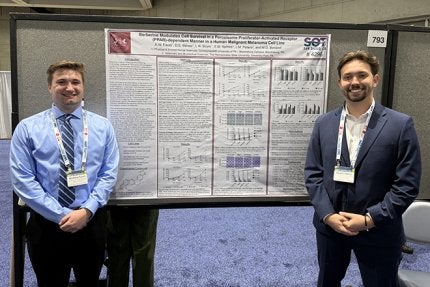
“Presenting was one of the most meaningful academic experiences I’ve had,” said Milnes, who’s committed to Edward Via College of Osteopathic Medicine for the fall. “Walking through the poster sessions and seeing hundreds of projects from major research institutions was honestly inspiring.”
He added, “It stood out to me that Bloomsburg was right there alongside these major research institutions, contributing meaningful work to the same scientific conversation.”
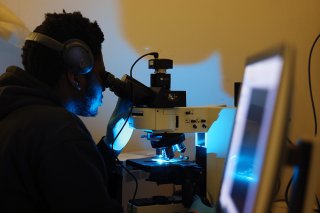
Under the mentorship of Michael Borland, professor of biochemistry and director of Bloomsburg’s cDNA Resource Center, the students spent more than a year refining their research on Peroxisome Proliferator-Activated Receptors (PPARs) and the impact of naturally occurring compounds — like berberine — on malignant melanoma cells.
“A key takeaway I was excited to share is the potential role of naturally occurring compounds in targeting pathways involved in melanoma,” Liebersohn said. “Specifically, looking at how these compounds may influence PPAR-related mechanisms and affect cell viability and apoptosis gave us a really interesting angle on potential therapeutic approaches.”
She added, “It’s still early, but the results support the idea that these compounds could be worth exploring further.”
Faust saw further research potential, as well.
“The key takeaway we shared was that our malignant melanoma cells with overexpressed (PPARs) were more sensitive to treatment with berberine,” Faust said. “These cells showed decreased growth and viability at lower doses and over a shorter time compared to our controls. This suggests a receptor-dependent mechanism, suggesting treatments targeting PPARs may offer more targeted approaches to melanoma treatment.”
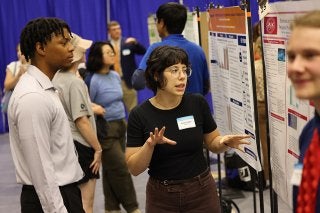
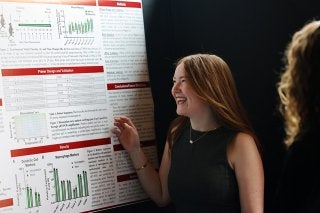
Milnes added, “What made it even more rewarding was when people came specifically looking for our poster because of its focus on (PPARs). That moment made it clear that our work has relevance beyond our own lab and has the potential to contribute to a much larger body of research.”
For Liebersohn, seeing their work draw attention from people across the field was an energizing affirmation of its relevance.
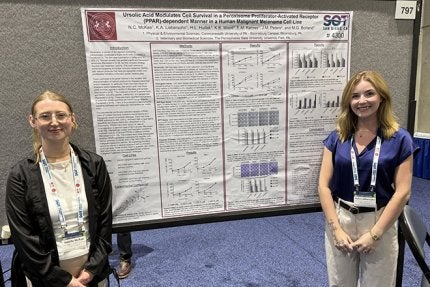
“The most meaningful part of presenting at the meeting was getting to talk about our research with people who actually work in the field,” Liebersohn said. “It was rewarding to see others engage with the project, ask thoughtful questions, and offer different perspectives. It made the work feel more real and impactful beyond just the lab.”
Beyond the data itself, the experience deepened their motivation to pursue research-driven medical careers, according to Liebersohn, adding how working in Dr. Borland’s lab shaped her interest in biomedical science and helped her grow more confident in designing experiments and analyzing real-world data.
“It gave me hands-on experience with experimental design, data analysis, and problem-solving in a real research setting, which made me more confident in pursuing research long-term,” Liebersohn said. “It also helped me realize I enjoy being in an environment where I can ask questions, troubleshoot, and contribute to something that could eventually have clinical relevance, which is something I want to continue doing in my future career.”
Milnes echoed that sentiment, reflecting on how his initial interest in medicine was shaped by personal experience and transformed through research.
“Working in Dr. Borland’s lab was my first real experience with bench research, and it had a lasting impact on me,” Milnes said. “My uncle’s passing from cancer inspired my interest in science, and this experience made that motivation more meaningful. It helped me see how rewarding it is to be part of research that aims to improve future outcomes.”
For Faust, the conference also reinforced a sense of purpose.
“We were surrounded by talented people from all around the world,” Faust said. “Realizing that our work held its own in this setting gave me a strong sense of confidence in our work and my future.”