Reframing Autism Through Psychology
Mansfield
Posted
Commonwealth University-Mansfield research reveals how knowledge can shift attitudes and build empathy.
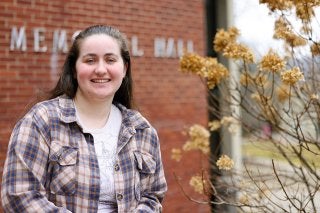
It started with a single page of information, but for Melanie Mecca, the results revealed something much bigger about how people learn, think, and connect.
Her path into research at Commonwealth University-Mansfield was shaped early by meaningful, hands-on experiences with neurodivergent individuals. What began as an interest in special education evolved into a deeper exploration of how people perceive and interact with those around them.
“I’d almost always had positive interactions with classmates on the spectrum,” said Mecca, who majored in psychology. “At first, I wanted to become a special education teacher.”
That direction shifted after taking Advanced Placement Psychology in high school, where she discovered a broader fascination with human behavior. Still, her connection to the neurodivergent community remained central. The summer after graduation, Mecca worked as a one-to-one aide in an Extended School Year program at Variety Club, a camp serving individuals with disabilities ages 5 to 24.
“I learned so much during my first summer and had so much fun with the kids that I came back the next summer,” Mecca said. “And plan to again.”
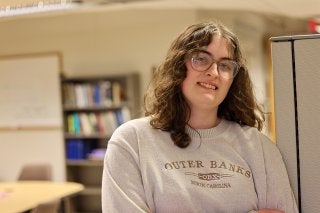
Those experiences ultimately inspired her research at Mansfield. Alongside fellow psychology students McKenna Miller and Max, she co-developed a study examining how college students perceive peers with autism spectrum disorder — and whether those perceptions can be improved through education.
Guided by their research lab course and faculty mentor, the team faced an early challenge. How to study autism within the constraints of a single semester? Rather than recruiting participants on the spectrum, they chose to focus on the broader student population and the assumptions they bring.
“We wanted to see how peers who maybe had less experience with neurodivergent individuals would view a situation differently,” Mecca said.
Their approach was simple but deliberate. Participants reviewed a brief educational intervention — a one-page sheet of facts about autism, along with a visual showing rising diagnosis rates — before responding to questions about a hypothetical peer with ASD.
What happened next exceeded expectations.
“One of the biggest surprises was the sheer impact that something so simple can have on perception,” Mecca said. “Almost every data point we measured was statistically significant.”
Even their professor was struck by the results. The study revealed that even minimal exposure to accurate information could lead to more positive attitudes toward individuals with autism, an insight that reinforced Mecca’s belief in the power of education to shape empathy.
“The entire research process can be tedious and frustrating at times,” Mecca said. “But when you see that your work actually made a difference, it’s worth it.”
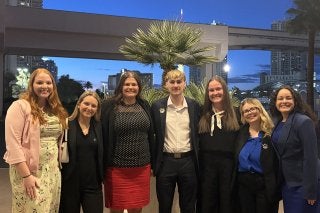
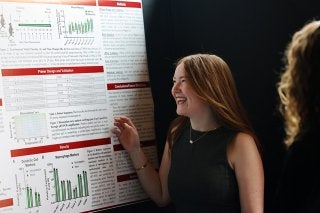
That sense of purpose followed her to the Council of Public Liberal Arts Colleges (COPLAC) Northeast Regional Conference in New Hampshire, where she joined five other Commonwealth University students who presented their work.
“The more I shared our research, the more I learned from others about what it meant to them,” Mecca said. “It helped solidify that our work could create positive change beyond just our study.”
The conference also pushed her outside her comfort zone, strengthening her confidence in academic conversations and public speaking. Surrounded by students presenting work across disciplines — from history to the arts — Mecca found inspiration in the diversity of ideas and perspectives.
“Being exposed to new people and new information helps you expand your horizons and become more well-rounded,” Mecca said.
Looking ahead, Mecca envisions a future where she can directly impact the lives of children, whether in schools, clinical settings, or community-based environments. While her exact path is still taking shape, her goal is clear — to make a difference.
Mansfield’s psychology program, she says, has been instrumental in preparing her for that future. Small class sizes foster close relationships with faculty, while collaborative coursework and peer counseling experiences have helped her grow both academically and personally.
“Being known personally by your professors makes a huge difference,” Mecca said. “They understand you, and you understand what they expect.”
Perhaps most importantly, her time at Mansfield has pushed her beyond what once felt comfortable. Through group research, new friendships, and opportunities like COPLAC, she discovered not only her voice as a researcher but her confidence in using it.
“I never would have imagined enjoying talking about my research to so many strangers,” Mecca said. “But seeing the real-life impact, it changes everything.”
In that moment of connection, Mecca found more than just academic success. She found direction, purpose, and a future rooted in understanding others.