
Bloomsburg Toy Library
About Us
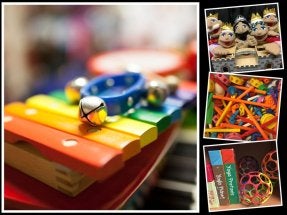
Located on Commonwealth University’s Bloomsburg campus (Andruss Library, Second Floor), the Bloomsburg Toy Library was created to advance the academic, professional, and civic development of members of our academic community.
By providing access to a multiple intelligences-inspired selection of literacy and play resources, the Toy Library supports faculty’s, staff’s, and students’ interactions with individuals of all developmental ages and abilities.
Visit the Toy Library during the Andruss Library’s posted hours of operation.
Literacy and Play Resources
Theory of Multiple Intelligences: Drawing on Gardner’s (2004) Theory of Multiple Intelligences (or MI Theory) and Thomas Armstrong’s (2009) practical translation of MI Theory for educators and children, the Bloomsburg Toy Library provides access to literacy and play resources that honor the different ways that people learn and use their knowledge. Explore each of the areas below to check out our collection of MI-inspired books, toys, equipment, supplies, and reference materials. It is our sincere hope that these resources will help people of all developmental ages and abilities explore their own strengths and appreciate the many ways that others show their smarts.
Word Smarts (Linguistic Intelligence)
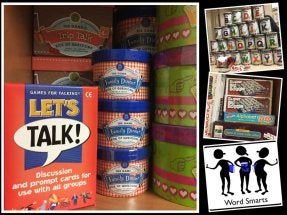
Word Smarts refers to the ability to read, write, speak, or listen. People who enjoy using their Word Smarts may like to read for fun or to learn something new; write emails, letters, stories, or poems; learn new words or foreign languages; play word games; or tell stories, jokes, and tongue twisters.
The Bloomsburg Toy Library offers literacy, play, and training resources to support the development of early literacy skills. Learn more about the six early literacy skills and ideas for strengthening them through shared reading and play in our Early Literacy Play booklet.
Logic Smarts (Logical Mathematical Intelligence)
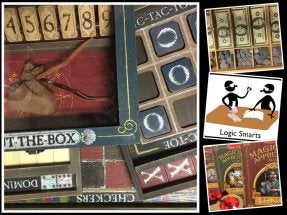
Logic Smarts refers to the ability to use logic, numbers, and reasoning to understand how something works, detect a pattern, or create something new. People who enjoy using their Logic Smarts may like to perform science experiments or cook; play math or strategy games; solve mysteries or break codes; organize information into charts and graph; or use computers for more than playing games.
Body Smarts (Bodily Kinesthetic Intelligence)
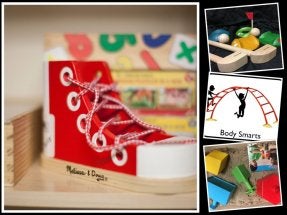
Body Smarts refers to the ability to use sensory experiences and movement to understand, make, or communicate something. People who enjoy using their Body Smarts may like to dance, act, or play sports; move around and be active; fix or make things with their hands; perform magic, card, or coin tricks; or make crafts.
Our Sensory Literacy booklet highlights books and toys that can help children explore their sensory processing capabilities, sensitivities, and preferences. The booklet also showcases Do-It-Yourself resources that can be fashioned in little time and at nominal cost.
Picture Smarts (Spatial Intelligence)
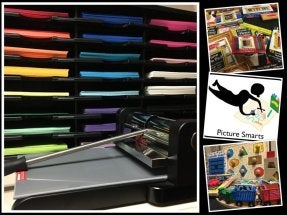
Picture Smarts refers to the ability to visualize or represent the spatial world. People who enjoy using their Picture Smarts may like to draw or design things; look at photos, artwork, maps, or diagrams; build with blocks or Legos; watch movies or play video games; or complete puzzles and mazes.
Our die cut center includes two Ellison Prestige Pro die cut machines and an extensive collection of die cuts. The die cut center is a popular resource for making bulletin boards, craft projects, and educational activities. Visit ellison.com for inspiration.
Music Smarts (Musical Intelligence)
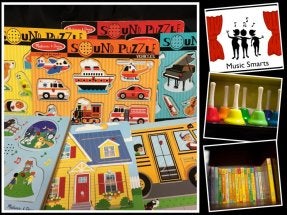
Music Smarts refers to the ability to read, write, or appreciate music; play an instrument; or sing. People who enjoy using their Music Smarts may like to sing, hum, or whistle; listen to music; tap, snap, clap, or play an instrument; write songs, raps, chants, or cheers; or add sound effects to books or films.
People Smarts (Interpersonal Intelligence)
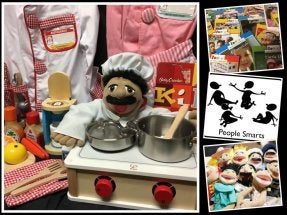
People Smarts refers to the ability to understand and work with other people. People who enjoy using their People Smarts may like to people watch, make new friends, participate in sociodramatic play, work in groups, or help others.
Self Smarts (Intrapersonal Intelligence)
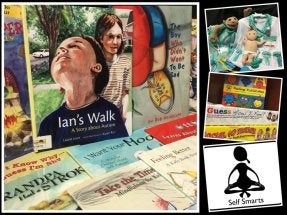
Self Smarts refers to the ability to understand your own thoughts, feelings, and behaviors. People who enjoy using their Self Smarts may like to set and work toward goals; work alone; reflect on their own thoughts and feelings; think about the future; or keep a diary or write in a journal.
Our Diversity and Kinship Literacy Play booklet includes a list of children’s picture books whose main characters model one or more character strengths related to the human virtues of wisdom, courage, humanity, justice, temperance, and transcendence (Peterson & Seligman, 2004). The booklet also includes suggestions for story-related activities aimed at encouraging children to reflect on their own positive traits.
Health literacy refers to the ability to read, understand, and act on health-related information. Access to developmentally appropriate literature on physical illness, psychological disorders, and psychosocial issues may help children to take a more active role in safeguarding their health, promoting their well-being, and enhancing their sensitivity and responsiveness to others. The Health Literacy Play initiative includes children’s books published by Magination Press, an imprint of the American Psychological Association.
Informed by Janoff-Bulman’s cognitive theory of traumatic stress, our Bibliotek identifies picture books that may help to begin restoring children’s assumptions about the world’s safety and predictability, others’ benevolence, and the self’s competence following exposure to a traumatic event.
Nature Smarts (Naturalistic Intelligence)
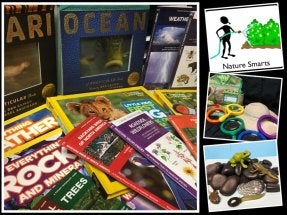
Nature Smarts refers to the ability to recognize, classify, and understand things in nature. People who enjoy using their Nature Smarts may like to take care of animals or plants; hike, camp, or explore nature; visit parks, zoos, or aquariums; protect the environment; or collect things from nature.