Sankofa Conference urges students to trade excuses for results
Bloomsburg
Posted
Keynote on personal ownership and time management anchored a day of sessions on mental health, community support, and thriving beyond the classroom.
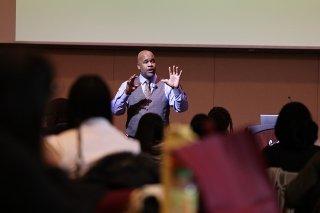
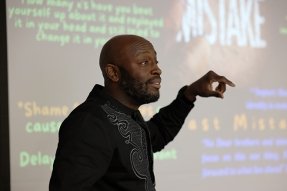
Commonwealth University–Bloomsburg’s 31st annual Sankofa Conference opened with a challenge, not a welcome, when keynote speaker Albert Jones told more than 200 college and high school students that “you are your biggest distraction” and pushed them to reset their lives with greater intention.
“No one can tell you that you can’t do something except for yourself,” said Jones, of AWJ Consulting, kicking off the day focused on leadership, identity, and student success. “Because if they tell you and you do it, guess what? They now control you.”
He tied that theme to the conference’s Sankofa framework, using an image of a seed sprouting into a plant to describe where students might be in their development — newly planted, beginning to grow, or already “starting to blossom.”
Rooted in the Akan (Ghana) concept of "it is not taboo to fetch what is at risk of being left behind," the annual Sankofa Conference promotes unity, discussion, and understanding through workshops, guest speakers, and cultural programming. The conference empowers participants to learn, appreciate, and celebrate the rich cultural heritage of people of African descent.
Following the keynote were three blocks of workshops that examined topics ranging from mental health and social media to student retention and high-performing teams.
“Today’s purpose is for you to find that path that you are on and keep moving in that direction,” said Jones, who spent a significant portion of the keynote focused on the idea of a personal “reset.” Jones contrasted how quickly people restart phones and laptops with how rarely they pause to reassess their own lives.
“We’re always quick to reset other things in our lives, but we never reset ourselves,” he said. “We never take a look at where we are along our path.”
Jones then led a brief exercise in which students wrote down their goals and were urged to keep them somewhere visible. He distinguished between thinking and acting, telling the audience, “Thinking versus doing are two different things. You’re the only person that can keep you from accomplishing your goals.”
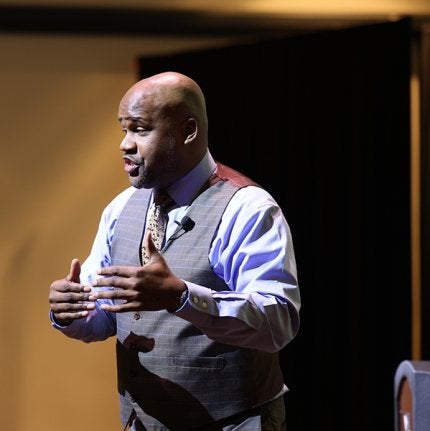
The next step, he said, is a concrete plan. “What is your plan?” he asked.
“Results and excuses. You can only have one of the two,” Jones said. “Stop making excuses and start getting results.”
At several points, Jones pressed students to consider what they truly “own.” He argued, while possessions can be taken away, education and personal growth cannot.
“They can take your car away from you,” Jones said. “They can take your house from you. They can take your clothes off you. They can’t take your education away from you. They cannot take your own personal growth and your own development away from you.”
Time management was another recurring theme. Jones reminded students that everyone has the same 24 hours and questioned how many of those are lost to oversleeping or scrolling on social media.
“While you may be oversleeping, someone is overworking,” he said. “And then you’re trying to play catch-up and understand how did they get so far ahead of you.”
Jones also encouraged students to stay “tour-ready,” a term he borrowed from his experience in manufacturing, where ownership visits could occur at any time. Rather than scrambling to prepare only when leaders arrive, he said, students should build a personal culture of readiness so that opportunities, such as interviews or networking conversations, feel familiar.
“Your first interview should not be your first interview,” Jones said, urging students to attend job fairs, ask questions, and practice interacting with employers. As he concluded, Jones asked the students to consider how they would use his message if it were the last talk they heard.
“What would you do with what I gave you right now to make a difference in your own personal life?” asked Jones, urging students to start with incremental change. “Even if you take one percent of your energy right now, that’s one percent more than you did yesterday. That’s all I’m asking for from you because you owe that to yourself.”
Sankofa Workshops
Following the keynote, the conference shifted to three rounds of workshops that expanded on the themes of leadership, wellness, and student success.
- “Cultivating Dignity and Embracing Difference,” led by Justin Brown, examined dignity as a foundation for ethical leadership, decision-making, and conflict resolution while challenging participants to confront personal biases and value diverse perspectives.
- “Purpose over Pressure,” facilitated by Keith Freeman, explored how external expectations and stress influence personal choices and well-being.
- “Don’t Tap Out: Analyzing the Correlation Between Student Retention and Campus Involvement,” student leaders Cora Cotson, Kayla Parks, Kyla Parks, and Randy Zea discussed their experiences as students of color at a predominantly white institution and outlined their research on the link between engagement and retention at Commonwealth University.
- “The PAC Mayne (High-Performing Teams),” presented by DJ Bryant, offered strategies to improve team performance through problem-solving, accountability, and communication.
- “It’s Time to Level Up but Do You Have the Confidence,” led by Lisa Wright Bryant, targeted student leaders seeking to build confidence, strengthen professional communication, and support their members more effectively.
- Brandon Wiley’s “Beyond Survival: Mental Wellness, Identity, and Thriving in Today’s Climate” provided a culturally conscious space to discuss stress, burnout, identity, and systemic pressures, with an emphasis on moving from survival to thriving.
- “The Baggage We Carry: An Exploration of the Invisible Challenges We Face,” presented by Jestina Drysdale, guided participants through reflection on past experiences, strategies for managing and releasing emotional burdens, and a closing “Letting Go” activity intended to help students move forward with clarity and purpose.
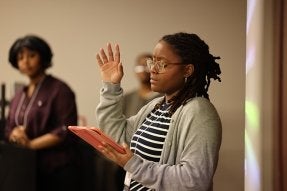
- “You vs. You… There is no limit or comparison for your greatness!” facilitated by Mia Marcel, addressed comparison and social media pressures and encouraged students to define success on their own terms.
- “The role the community can play in student success,” led by Serenity Spivey, DeVaney Jaconski, and Noah Murray, highlighted how family, community organizations, and local resources can support student motivation and long-term achievement.
- “Run your own Race: Owning your individual journey to success,” presented by Dr. Marquise Isaac-Rivers, encouraged students to resist comparison, acknowledge the impact of social media, and “run their own race” while allowing themselves grace during setbacks.
- Chantel Detreville’s “Leading Beyond the Classroom: Exploring careers in student affairs” introduced students to roles in residence life, advising, student engagement, multicultural affairs, and career development, emphasizing the impact of student affairs professionals on campus life.
- “Dissecting the Moral and Social Implications of Modern Technology,” a roundtable led by Marcus Scales, examined the ethical and social dimensions of artificial intelligence, social media, and data.
- “Success Beyond the Classroom: Leadership and Career Preparation in Action,” presented by Decoda Williams and Brianna Yearde-Hinds, showcased programs such as the Emerging Scholars Program and the K. Leroy Irvis Leadership Institute, which combine academic standards, study requirements, community service, and leadership development to prepare students for life after college.
By the close of the conference, organizers had reinforced Sankofa’s central idea of looking back to one’s past, mentors, and experiences in order to move forward with greater intention. For many students, the challenge now shifts from attending sessions to applying the day’s lessons — clarifying who they are, tightening their plans, and deciding how they will lead, follow with purpose, or stop getting in their own way.
Sankofa Gallery