Conservation rooted in community
Lock Haven
Posted
CU-Lock Haven graduate continues work in conservation and waterway protection.
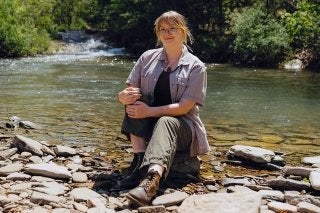
For Lydia Haulman, graduation from Commonwealth University-Lock Haven was not a finish line. It was a next step.
Since earning her degree in environmental biology and ecology in 2025, Haulman has carried with her the values that shaped her time as a student: a love for the outdoors, a strong sense of community, and the belief that meaningful environmental work does not require leaving home behind.
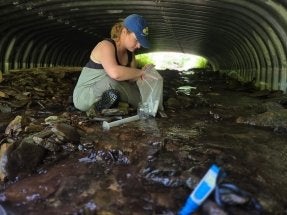
As a student and intern, Haulman balanced coursework with hands-on research and field experience, including studying trout populations in Pennsylvania waterways. The work helped her build practical skills, while also changing the way she thought about conservation.
“What stood out to me was how collaborative the work really is,” Haulman says. “Different agencies and different people all coming together because they care about the same thing.”
After graduating, Haulman continued that work through conservation internships and field projects focused on protecting rivers and streams across the region. Her days often start early and are spent in the field, loading equipment, surveying streams, collecting data, and assessing habitat conditions. No two days look exactly the same.
Some of her most meaningful experiences have taken place close to home. Many of the stream assessments she has worked on ran through residential areas, requiring her team to speak directly with landowners and community members. Those conversations reinforced how closely environmental health is tied to everyday life.
“Brook trout are indicator species,” she says. “They only thrive in clean water. When you find brook trout, it means the water is healthy. Protecting them protects everything connected to that ecosystem.”
That connection between people and place continues to guide Haulman’s path after graduation.
Alongside her conservation work, she still spends time at Avenue 209, a local coffee shop where she has worked for more than five years. To Haulman, conservation and coffee are not as different as they might seem.
“They both create community,” she says. “If you want change to happen, people need places to talk, ask questions, and care together.”
Looking back, Haulman says her time at Lock Haven gave her more than technical knowledge. It taught her how to work with others, adapt to new situations, and stay grounded in what matters.
“We have an incredible small town and an incredible community,” she says. “I learned that you do not have to leave to be successful. There are real opportunities right here.”
For students and recent graduates considering environmental careers, Haulman offers honest advice.
“It is not an easy field, and you will hear no,” she says. “But if you have the passion and you care about the work, there is space for you. Do not give up.”
As she navigates life after graduation, Haulman remains focused on what comes next, while staying rooted in the place that shaped her. “Interviewing, brewing, and conserving,” she says.
As her work continues beyond CU, Haulman stands as a reminder that education, community, and purpose can come together to create lasting impact, especially when you start right where you are.