Biology students dive into Susquehanna River mussel restoration
Lock Haven
Posted
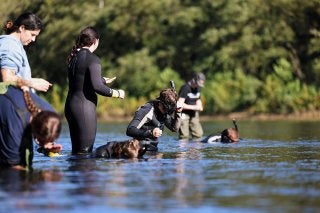
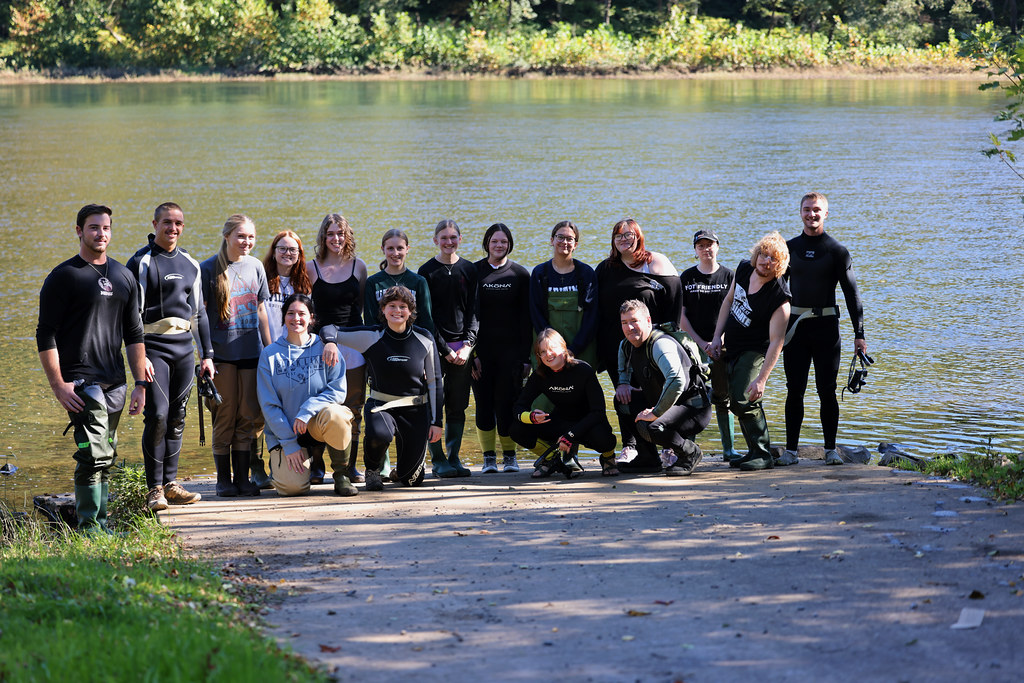
NORTH BEND — A few small, golden-brown shells rest in an open palm. Nearby, a class of Commonwealth University-Lock Haven students bend over the West Branch Susquehanna River, reaching beneath the surface as sunlight catches the shallow water.
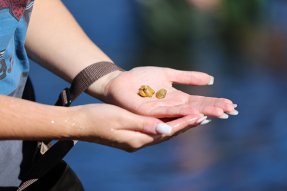
Along the wooded shoreline, the work unfolds close to the riverbed. One carefully placed mussel at a time.
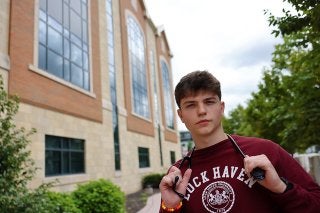
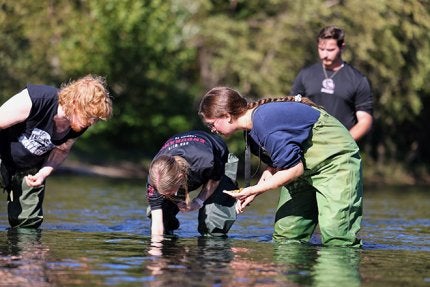
“Getting into the water and planting the mussels was such a great hands-on experience,” said Skylar Fincher-Butler, a biology major focused on ecology and environmental conservation. “I felt very connected to the environment the entire time.”
For these biology students, this is ecology beyond the textbook. It’s a chance to help restore native freshwater mussels while discovering where their own academic interests might lead.
Through associate professor Daniel Spooner’s class, students are assisting the ongoing West Branch Susquehanna River Mussel Restoration Project, helping return juvenile eastern lampmussels and yellow lampmussels to waters recovering from acid mine drainage. Their contribution are connecting a semester of learning with a conservation effort whose progress researchers will follow beyond the day’s mussel release.
Placing a mussel in the river requires more than finding an open spot. Students learned to settle each animal securely into the riverbed, positioning its muscular foot to dig into the substrate while leaving its siphon unobstructed for feeding and respiration.
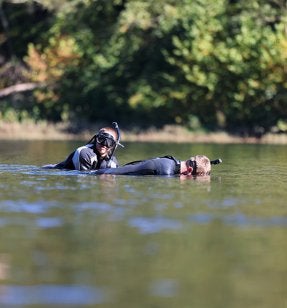
The work began before students entered the water. Throughout the semester, they helped measure and mark mussels and attach radio-frequency identification tags that allow researchers to locate the animals and monitor their progress. Wetsuits and snorkeling equipment were also provided, allowing interested students to see the habitat from beneath the surface.
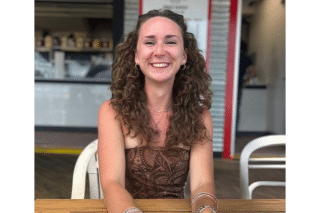
For Peregrine Weiser, a biology major focused on ecology and environmental conservation, that invitation brought a first snorkeling experience and a new appreciation for the animals she was helping restore.
“I had a great time planting the mussels and exploring the river,” Weiser said. “I knew little about freshwater mussels before this. My favorite lesson was learning about their role within the ecosystem and how they can help restore the Susquehanna.”
Supported by the National Fish and Wildlife Foundation, the broader project seeks to restore three native mussel species. The juvenile lampmussels were propagated at a Maryland aquaculture facility through a partnership with the Maryland Department of Natural Resources, using adult broodstock collected from the Susquehanna the previous year.
A separate part of the effort uses American eels carrying the larvae of eastern elliptic mussels, which depend on host fish to complete their life cycle. Over three years, the project stocked more than 10,000 young eels and 10,000 juvenile lampmussels across recovering and established mussel habitats.
For the students, the experience offered more than practice in field techniques. It created room to connect their education with a sense of purpose. Fincher-Butler hopes to work in mountain environments, where waterways influence surrounding habitats and wildlife. Working in the river broadened an interest in aquatic organisms while reinforcing a commitment to conservation.
“This has solidified in me that I made the right decision in choosing ecology as my major because of how fulfilling it was to potentially help these species get integrated back into their habitats,” Fincher-Butler said.
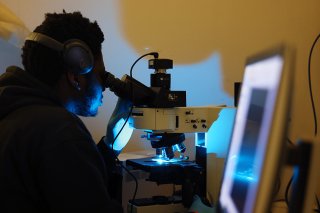
For classmate Jerry Lambert, a biology major focused on marine biology, freshwater fieldwork connects with a growing interest in mollusks. Lambert has worked for the Pennsylvania Fish and Boat Commission and is conducting independent research on freshwater mollusks, with plans to study marine mollusks in the future.
“This class has cemented my interest in ecology and the field of biology as a whole,” said Lambert, who credited Spooner with helping shape undergraduate and postgraduate plans.
Weiser, too, sees the class as an early step toward a future built around her interests.
“I’ve been interested in ecology for quite some time, so this class has been very exciting for me,” Weiser said. “My dream is to work in a field relating to ecology and mycology. This will hopefully be part of the start of fulfilling that dream.”