Simulation Center
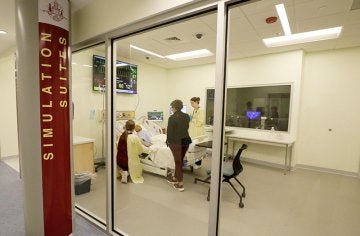
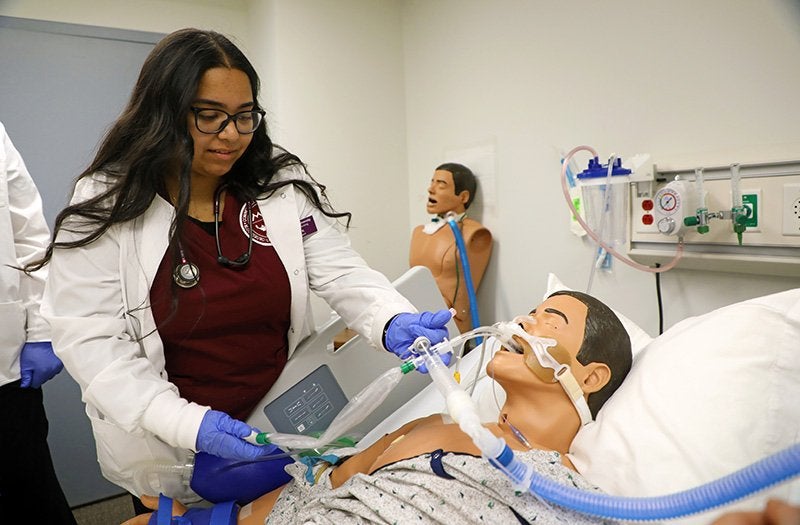
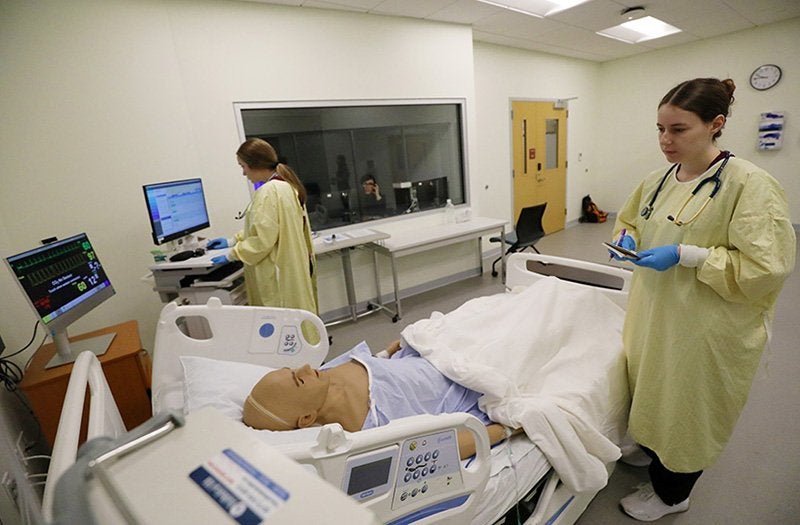
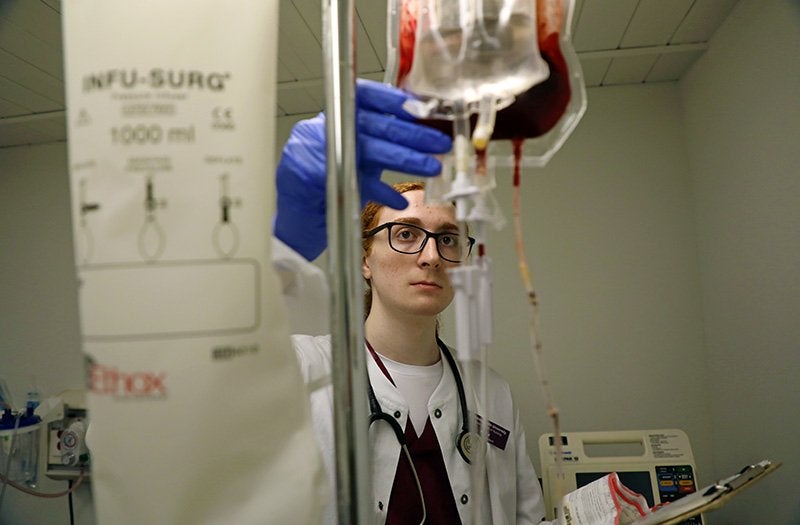
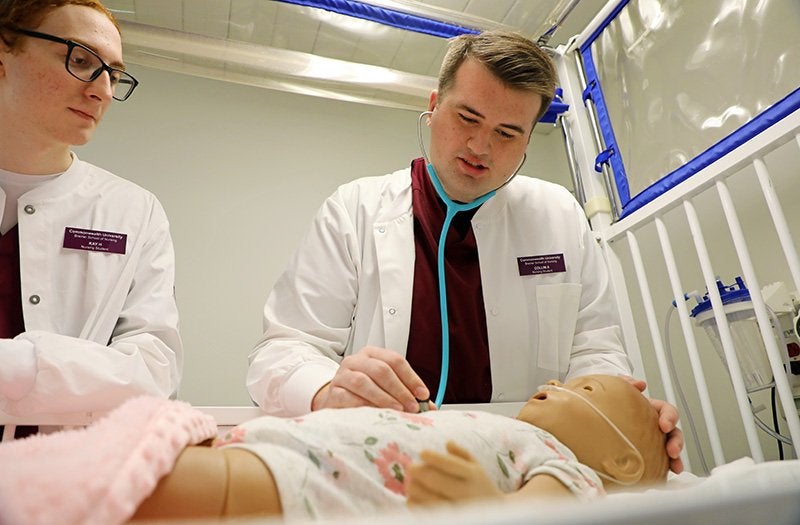
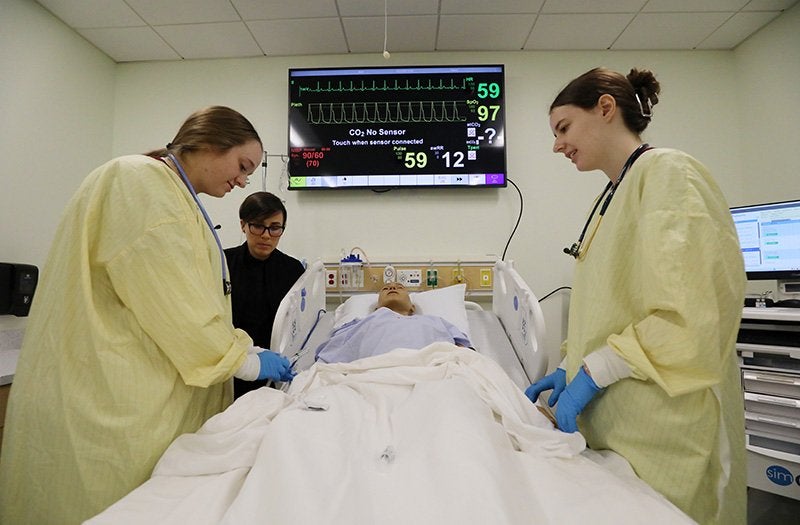
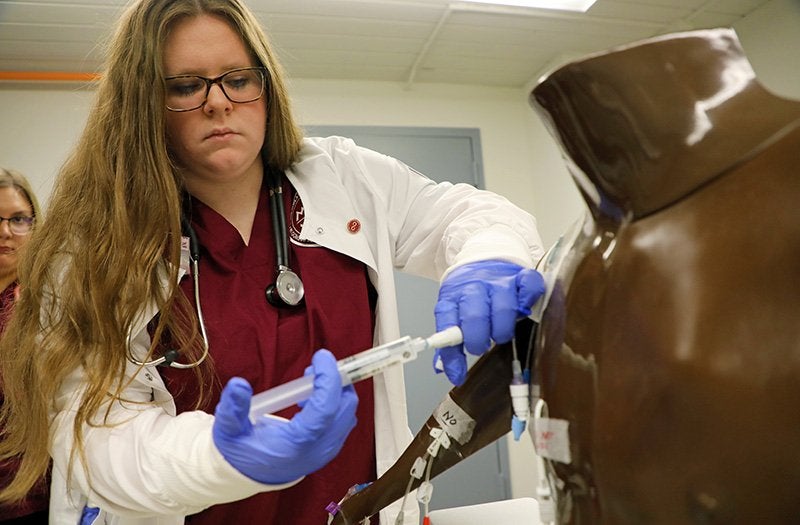
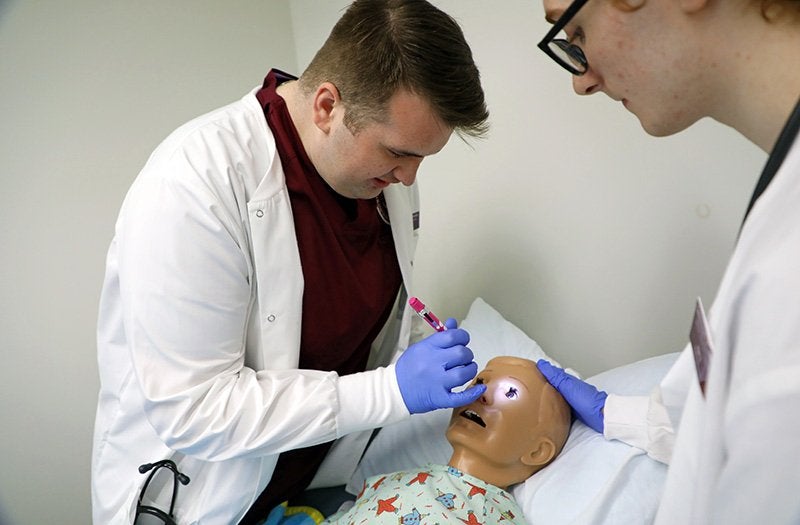
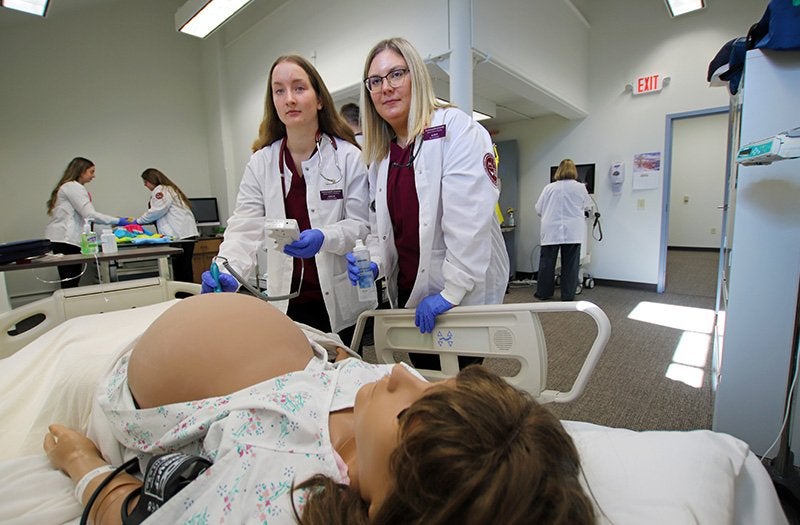
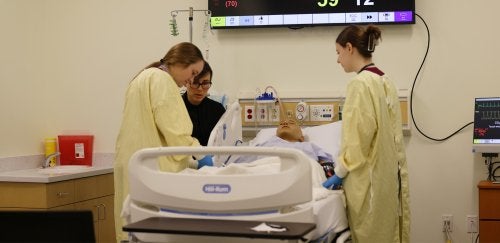
Commonwealth University’s Simulation Center purpose is to provide our nursing students with a safe and controlled environment to learn and practice the skills necessary to excel not only during their clinical experiences at CU but throughout their nursing careers. The Simulation Center, located on each campus, is equipped with hospital beds, various injection and task trainer models, numerous manikins of differing fidelities from newborn to adult, and computerized medication dispensing systems.
Students have access to a computer program that allows for practice in reading and documenting in an electronic medical record during simulated clinical scenarios. Students engage in skills demonstrations, practice sessions, and clinical simulations during their sophomore, junior, and senior years.
Skills Testing
Demonstrations of select, course specific skills are provided at the sophomore and part of the junior years. As the student progresses in their junior and through their senior year, skills will transition to independent learning. Students are required to complete readings within their skills book, watch assigned videos, and take an online quiz prior to most skills demonstrations. Students will then have free time throughout the week to practice prior to a designated testing time.
Students are responsible for reviewing the BSN handbook and D2L Brightspace for specific requirements related to dress, lab coats, and nurse packs when coming to the Simulation Center for practice or demonstration. While the Simulation Center remains a safe place to learn and make mistakes, point reduction policies are in place in order to foster student accountability, professional behaviors, and efficient use of Simulation Center resources.
Simulation
As part of the clinical curricular thread, undergraduate students complete simulated clinical scenarios during their sophomore, junior, and senior years.
Through the use of medium and high-fidelity manikins, and in some cases the use of standardized patients, pairs of students’ complete cases that include acute and chronic med-surg conditions, home health, school health, and prison or occupational nursing. Simulations are created around the psychomotor skills learned within the lab. The objective of simulation is to critically think about these acquired skills in order to safely apply them to their ‘patient’ in a safe and controlled setting. This process grows confidence in the nursing student as they continue and progress in a live clinical setting. Students will be provided with background information on their scenario prior to their simulation experience and will take part in a debriefing exercise following simulation.
Simulation Center Resources
Nursing students may borrow various resources from the Simulation Center including posters and models for health fairs, blood pressure cuffs, and various other client education materials for teaching projects. Additionally, nursing students have access to current course textbooks and small meeting rooms for group projects.

News

Bloomsburg University Foundation Receives $200,000 Commitment from UPMC for Nursing Simulation Center
Bloomsburg
Commonwealth University-Bloomsburg is pleased to announce a generous $200,000 gift from UPMC, which will be used to name the Peri-Operative Suite within the new Nursing Simulation Center at the...
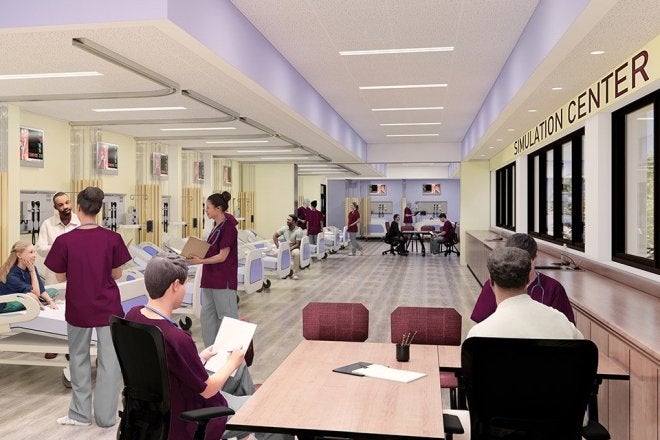
Degenstein Foundation, donors support nursing simulation center
University-wide
For decades, the nursing department at Bloomsburg University has consistently ranked among the best in the state, having educated thousands for one of the most critical careers in the healthcare field...